Bài 58 – Tiếng Anh Y Khoa: Sốc chưa xác định nguyên nhân kèm nhịp tim chậm có triệu chứng * Undifferentiated Shock with Symptomatic Bradycardia!
BÀI 58 – MEDICAL ENGLISH
Undifferentiated Shock with Symptomatic Bradycardia
Sốc chưa xác định nguyên nhân kèm nhịp tim chậm có triệu chứng
Đơn vị tổ chức: CLB Bóng đá PCC fC
Chương trình: Tiếng Anh Y Khoa – Thiết yếu • Thực hành • Nghiên cứu
Thời lượng đề xuất: 20–25 phút
I. MỤC TIÊU BÀI HỌC
Sau bài học, học viên có thể:
- Trình bày ngắn gọn một người bệnh sốc được chuyển đến ICU.
- Mô tả trình tự diễn biến trước khi huyết động xấu đi.
- Báo cáo chính xác mạch, huyết áp, GCS và liều thuốc vận mạch.
- Diễn giải các phát hiện trên ECG và siêu âm tại giường.
- Phân biệt giữa:
- Ngộ độc thuốc chẹn beta;
- Tác dụng hoặc sự tích lũy metoprolol;
- Giảm thể tích tuần hoàn;
- Sốc nhiễm khuẩn;
- Rối loạn điện giải;
- Bệnh lý dẫn truyền tim.
- Sử dụng ngôn ngữ thận trọng khi chưa đủ bằng chứng để xác định nguyên nhân.
II. TÌNH HUỐNG LÂM SÀNG
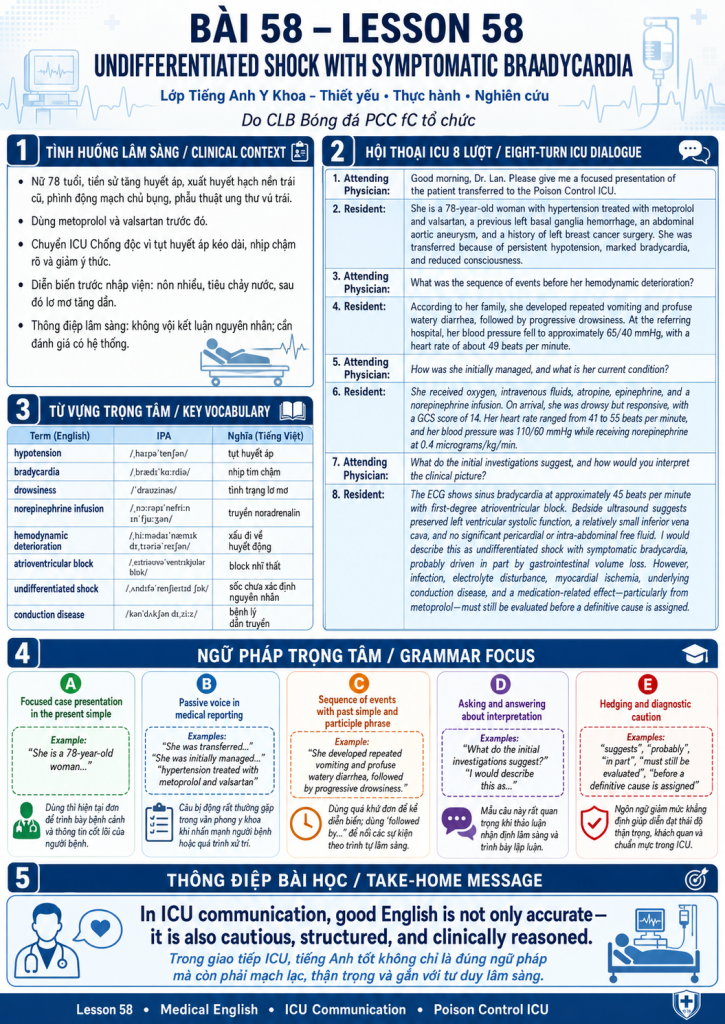
Một phụ nữ 78 tuổi có tiền sử tăng huyết áp đang dùng metoprolol và valsartan, xuất huyết não cũ, phình động mạch chủ bụng và phẫu thuật ung thư vú trái.
Người bệnh xuất hiện nôn nhiều, tiêu chảy nước, lơ mơ, tụt huyết áp và nhịp tim chậm. Bệnh nhân được truyền dịch, atropine, epinephrine và norepinephrine trước khi chuyển đến ICU Chống độc.
Vấn đề lâm sàng trung tâm:
Is this primarily hypovolemic shock, medication-associated bradycardia, or a mixed and still undifferentiated form of shock?
III. EIGHT-TURN ICU DIALOGUE
Undifferentiated Shock with Symptomatic Bradycardia
1. Attending Physician
Good morning, Dr. Lan. Please give me a focused presentation of the patient transferred to the Poison Control ICU.
2. Resident
She is a 78-year-old woman with hypertension treated with metoprolol and valsartan, a previous left basal ganglia hemorrhage, an abdominal aortic aneurysm, and a history of surgery for left breast cancer. She was transferred because of persistent hypotension, marked bradycardia, and reduced consciousness.
3. Attending Physician
What was the sequence of events leading to her hemodynamic deterioration?
4. Resident
According to her family, she developed repeated vomiting and profuse watery diarrhea, followed by progressive drowsiness. At the referring hospital, her blood pressure fell to approximately 65 over 40 millimeters of mercury, while her heart rate decreased to about 49 beats per minute.
5. Attending Physician
How was she initially managed, and what was her condition on arrival?
6. Resident
She received supplemental oxygen, intravenous fluids, atropine, epinephrine, and a norepinephrine infusion. On arrival, she was drowsy but responsive, with a GCS score of 14. Her heart rate ranged from 41 to 55 beats per minute, and her blood pressure was maintained at 110 over 60 millimeters of mercury with norepinephrine at 0.4 micrograms per kilogram per minute.
7. Attending Physician
What do the initial investigations show, and how would you interpret the overall clinical picture?
8. Resident
The ECG demonstrates sinus bradycardia at approximately 45 beats per minute with first-degree atrioventricular block. Bedside ultrasonography shows preserved cardiac systolic function, a relatively small inferior vena cava, and no significant pericardial effusion or intra-abdominal free fluid.
I would currently describe this as undifferentiated shock associated with symptomatic bradycardia, with gastrointestinal fluid loss likely contributing to intravascular volume depletion. However, sepsis, electrolyte abnormalities, myocardial ischemia, underlying conduction-system disease, and medication-related bradycardia—particularly from metoprolol accumulation or increased susceptibility—must be evaluated before a definitive diagnosis is established.
IV. TỪ VỰNG TRỌNG TÂM
| Từ hoặc cụm từ | Phiên âm IPA | Nghĩa |
| undifferentiated shock | /ˌʌndɪfəˈrenʃieɪtɪd ʃɒk/ | sốc chưa xác định nguyên nhân |
| symptomatic bradycardia | /ˌsɪmptəˈmætɪk ˌbrædɪˈkɑːdiə/ | nhịp tim chậm có triệu chứng |
| persistent hypotension | /pəˈsɪstənt ˌhaɪpəˈtenʃən/ | tụt huyết áp kéo dài |
| reduced consciousness | /rɪˈdjuːst ˈkɒnʃəsnəs/ | giảm ý thức |
| hemodynamic deterioration | /ˌhiːmədaɪˈnæmɪk dɪˌtɪəriəˈreɪʃən/ | tình trạng huyết động xấu đi |
| profuse watery diarrhea | /prəˈfjuːs ˈwɔːtəri ˌdaɪəˈrɪə/ | tiêu chảy nước số lượng nhiều |
| progressive drowsiness | /prəˈɡresɪv ˈdraʊzinəs/ | tình trạng lơ mơ tăng dần |
| supplemental oxygen | /ˌsʌplɪˈmentəl ˈɒksɪdʒən/ | oxy bổ sung |
| norepinephrine infusion | /ˌnɔːrepɪˈnefrɪn ɪnˈfjuːʒən/ | truyền norepinephrine |
| first-degree AV block | /ˌfɜːst dɪˈɡriː ˌeɪ ˈviː blɒk/ | blốc nhĩ thất độ I |
| preserved systolic function | /prɪˈzɜːvd sɪˈstɒlɪk ˈfʌŋkʃən/ | chức năng tâm thu còn bảo tồn |
| intravascular volume depletion | /ˌɪntrəˈvæskjələ ˈvɒljuːm dɪˈpliːʃən/ | giảm thể tích trong lòng mạch |
| conduction-system disease | /kənˈdʌkʃən ˈsɪstəm dɪˌziːz/ | bệnh lý hệ thống dẫn truyền |
| medication-related effect | /ˌmedɪˈkeɪʃən rɪˌleɪtɪd ɪˈfekt/ | tác động liên quan đến thuốc |
| definitive diagnosis | /dɪˈfɪnətɪv ˌdaɪəɡˈnəʊsɪs/ | chẩn đoán xác định |
V. CỤM CÂU GIAO BAN ICU THIẾT YẾU
1. Yêu cầu trình bày tập trung
Please give me a focused presentation of the patient.
Hãy trình bày tập trung về người bệnh.
2. Hỏi trình tự diễn biến
What was the sequence of events leading to her deterioration?
Trình tự các sự kiện dẫn đến tình trạng xấu đi của bệnh nhân là gì?
3. Hỏi cách xử trí ban đầu
How was she initially managed?
Người bệnh đã được xử trí ban đầu như thế nào?
4. Báo cáo huyết áp khi đang dùng vận mạch
Her blood pressure was maintained at 110/60 mmHg with norepinephrine.
Huyết áp được duy trì ở mức 110/60 mmHg nhờ norepinephrine.
5. Diễn giải thận trọng
I would currently describe this as undifferentiated shock.
Hiện tại, tôi sẽ mô tả đây là tình trạng sốc chưa xác định nguyên nhân.
6. Tránh kết luận quá sớm
A medication-related effect must be evaluated before a definitive diagnosis is established.
Cần đánh giá tác động liên quan đến thuốc trước khi xác lập chẩn đoán cuối cùng.
VI. NGỮ PHÁP TRỌNG TÂM
1. Câu hỏi ở thể bị động
How was she initially managed?
Cấu trúc:
How + was/were + subject + past participle?
Câu bị động được sử dụng vì trọng tâm là người bệnh và biện pháp điều trị, không phải người thực hiện.
Các ví dụ:
- How was the patient resuscitated?
- How was the vasopressor initiated?
- How was the diagnosis confirmed?
2. Thì quá khứ đơn để trình bày diễn biến
She developed repeated vomiting.
Her blood pressure fell to 65/40 mmHg.
She received intravenous fluids.
Thì quá khứ đơn mô tả:
- Triệu chứng đã xuất hiện;
- Các sự kiện đã xảy ra;
- Biện pháp đã được thực hiện.
Các động từ trọng tâm:
| Hiện tại | Quá khứ | Nghĩa |
| develop | developed | xuất hiện |
| fall | fell | giảm |
| decrease | decreased | giảm |
| receive | received | được nhận |
| show | showed | cho thấy |
| maintain | maintained | duy trì |
3. “While” diễn tả hai diễn biến đồng thời
Her blood pressure fell to 65/40 mmHg, while her heart rate decreased to 49 beats per minute.
“While” nối hai thay đổi xảy ra trong cùng giai đoạn:
- Blood pressure fell.
- Heart rate decreased.
Không nên lạm dụng “and” khi muốn nhấn mạnh hai diễn biến huyết động đồng thời.
4. “With” để bổ sung thông tin lâm sàng
She was drowsy but responsive, with a GCS score of 14.
The ECG showed sinus bradycardia with first-degree AV block.
Cấu trúc:
Main statement + with + noun phrase
“With” giúp câu báo cáo ngắn gọn, tránh phải tách thành nhiều câu đơn.
5. Động từ khuyết thiếu “must” trong lập luận lâm sàng
Infection and electrolyte disturbances must still be evaluated.
“Must” ở đây thể hiện yêu cầu chuyên môn cần thực hiện, không khẳng định rằng bệnh nhân chắc chắn mắc các bệnh lý này.
So sánh:
- She has metoprolol poisoning.
Khẳng định chẩn đoán. - Metoprolol toxicity must be considered.
Cần xem xét khả năng ngộ độc. - A medication-related effect may be contributing.
Thuốc có thể là một yếu tố góp phần.
6. Ngôn ngữ giảm mức độ khẳng định
Trong hội thoại ICU, cần phân biệt:
Khẳng định chắc chắn
The ECG demonstrates sinus bradycardia.
Đây là phát hiện khách quan.
Nhận định có cơ sở nhưng chưa chắc chắn
Gastrointestinal fluid loss is likely contributing to volume depletion.
Giả thuyết cần kiểm tra
A medication-related effect may be contributing.
Yêu cầu loại trừ
Myocardial ischemia must still be evaluated.
Đây là kỹ năng ngôn ngữ quan trọng giúp tránh chẩn đoán quá mức.
VII. PHÂN TÍCH TƯ DUY LÂM SÀNG
1. Bằng chứng gợi ý giảm thể tích tuần hoàn
- Nôn nhiều;
- Tiêu chảy nước số lượng lớn;
- Tĩnh mạch chủ dưới tương đối nhỏ;
- Chức năng tâm thu tim còn bảo tồn;
- Không có dịch tự do ổ bụng đáng kể.
2. Bằng chứng cho thấy nhịp tim chậm không phù hợp hoàn toàn với giảm thể tích đơn thuần
Giảm thể tích thường kích hoạt nhịp tim nhanh. Người bệnh lại có:
- Nhịp tim 41–55 lần/phút;
- Nhịp xoang chậm;
- Blốc nhĩ thất độ I;
- Tiền sử sử dụng metoprolol;
- Tuổi cao và nguy cơ bệnh lý dẫn truyền.
Do đó, có thể tồn tại nhiều cơ chế đồng thời.
3. Các chẩn đoán cần đánh giá
- Hypovolemic shock;
- Septic or distributive shock;
- Medication-associated bradycardia;
- Beta-blocker accumulation or toxicity;
- Electrolyte disturbance;
- Myocardial ischemia;
- Intrinsic conduction-system disease;
- Mixed shock.
4. Cách kết luận phù hợp
Không nên nói ngay:
This is metoprolol poisoning.
Nên nói:
This is undifferentiated shock with symptomatic bradycardia. Gastrointestinal volume loss is probably contributing, while a medication-related effect remains under evaluation.
VIII. THỰC HÀNH PHÁT ÂM
Đọc theo nhóm từ, không đọc rời từng từ:
persistent hypotension
marked bradycardia
progressive drowsiness
first-degree atrioventricular block
preserved cardiac systolic function
intravascular volume depletion
medication-related bradycardia
before a definitive diagnosis is established
Câu luyện đọc:
Her blood pressure was maintained at 110 over 60 millimeters of mercury with norepinephrine at 0.4 micrograms per kilogram per minute.
IX. BÀI TẬP THỰC HÀNH
Bài tập 1: Điền từ
- She was transferred because of persistent ______ and marked bradycardia.
- Her blood pressure ______ to 65/40 mmHg.
- The ECG demonstrates sinus bradycardia with first-degree ______ block.
- Gastrointestinal fluid loss may contribute to intravascular volume ______.
- A medication-related effect must still be ______.
Đáp án: hypotension – fell – atrioventricular – depletion – evaluated.
Bài tập 2: Chuyển sang câu bị động
- The referring team administered atropine.
- The physicians initiated norepinephrine.
- The ICU team performed bedside ultrasonography.
Đáp án:
- Atropine was administered by the referring team.
- Norepinephrine was initiated.
- Bedside ultrasonography was performed by the ICU team.
Bài tập 3: Chọn cách diễn đạt khoa học hơn
A
She definitely has metoprolol poisoning.
B
A medication-related effect, particularly from metoprolol, should be considered and evaluated.
Đáp án: B.
Bài tập 4: Role-play
Học viên A – Attending Physician
Hỏi về:
- Lý do chuyển viện;
- Trình tự diễn biến;
- Điều trị ban đầu;
- ECG và siêu âm;
- Chẩn đoán phân biệt.
Học viên B – Resident
Trình bày trong tối đa 90 giây, sử dụng ít nhất năm cụm từ:
- persistent hypotension;
- symptomatic bradycardia;
- progressive drowsiness;
- preserved systolic function;
- volume depletion;
- medication-related effect;
- definitive diagnosis.
X. THÔNG ĐIỆP GHI NHỚ
Describe what is known, distinguish it from what is suspected, and avoid assigning a definitive cause before sufficient evidence is available.
Hãy trình bày rõ điều đã biết, phân biệt với điều đang nghi ngờ và tránh kết luận nguyên nhân khi chưa có đủ bằng chứng.
PCC fC MEDICAL ENGLISH MESSAGE
Clinical precision creates linguistic precision.
Sự chính xác trong tư duy lâm sàng tạo nên sự chính xác trong ngôn ngữ y khoa.
CLB Bóng đá PCC fC
Vì một đam mê – Khỏe, Vui, Hạnh phúc