Bài 50 – Tiếng Anh Y Khoa: Trước liều kế tiếp: Theo dõi Tacrolimus an toàn * Before the Next Dose: Monitoring Tacrolimus Safely
PCC Language – Thăng Long, Hà Nội, ngày 6/7/2026, Trong điều trị các bệnh tự miễn nặng như anti-MDA5 dermatomyositis có tổn thương interstitial lung disease, người thầy thuốc không chỉ cần lựa chọn đúng thuốc mà còn phải theo dõi thuốc một cách chính xác và an toàn. Tacrolimus là thuốc ức chế miễn dịch có vai trò quan trọng, nhưng hiệu quả và độc tính của thuốc phụ thuộc nhiều vào nồng độ trong máu. Vì vậy, người bệnh cần hiểu rõ: mẫu máu đo nồng độ đáy tacrolimus phải được lấy ngay trước liều thuốc tiếp theo. Bài học hôm nay giúp học viên luyện cách giải thích bệnh, kế hoạch điều trị và nguyên tắc theo dõi nồng độ thuốc bằng tiếng Anh y khoa rõ ràng, chính xác và nhân văn.
Medical English Lesson 50
Before the Next Dose: Monitoring Tacrolimus Safely
Monitoring Tacrolimus in Anti-MDA5 Dermatomyositis
1. Đoạn dẫn bài học
Trong điều trị các bệnh tự miễn nặng như anti-MDA5 dermatomyositis có tổn thương interstitial lung disease, người thầy thuốc không chỉ cần lựa chọn đúng thuốc mà còn phải theo dõi thuốc một cách chính xác và an toàn. Tacrolimus là thuốc ức chế miễn dịch có vai trò quan trọng, nhưng hiệu quả và độc tính của thuốc phụ thuộc nhiều vào nồng độ trong máu. Vì vậy, người bệnh cần hiểu rõ: mẫu máu đo nồng độ đáy tacrolimus phải được lấy ngay trước liều thuốc tiếp theo. Bài học hôm nay giúp học viên luyện cách giải thích bệnh, kế hoạch điều trị và nguyên tắc theo dõi nồng độ thuốc bằng tiếng Anh y khoa rõ ràng, chính xác và nhân văn.
2. Mục tiêu bài học
Sau bài học này, học viên có thể:
- Giải thích ngắn gọn cho người bệnh về anti-MDA5 dermatomyositis và tổn thương phổi kẽ.
- Sử dụng tiếng Anh y khoa để trình bày kế hoạch điều trị bằng methylprednisolone, tacrolimus và điều trị kháng virus khi có nhiễm CMV.
- Giải thích đúng khái niệm tacrolimus trough level.
- Dặn người bệnh không uống tacrolimus trước khi lấy mẫu máu.
- Nắm được các cấu trúc ngữ pháp quan trọng trong hội thoại y khoa:
will, can/may, passive voice, relative clause, until after, if necessary / if needed.
3. Clinical Background – Nền tảng lâm sàng
Anti-MDA5 dermatomyositis là một thể bệnh viêm da cơ có thể đi kèm rapidly progressive interstitial lung disease, tức bệnh phổi kẽ tiến triển nhanh. Trong nhóm bệnh nhân này, điều trị sớm và phối hợp thuốc ức chế miễn dịch thường được cân nhắc để cải thiện tiên lượng. Một số khuyến cáo và tổng quan y văn nhấn mạnh vai trò của điều trị phối hợp trong viêm da cơ anti-MDA5 có bệnh phổi kẽ tiến triển nhanh.
Tacrolimus là thuốc ức chế miễn dịch cần theo dõi nồng độ trong máu. Thông số thường dùng là pre-dose concentration, còn gọi là trough concentration hoặc C0, tức nồng độ thuốc ngay trước liều kế tiếp. Đây là một nguyên tắc quan trọng trong theo dõi điều trị bằng tacrolimus.
Trong hội thoại y khoa, bác sĩ cần giải thích rõ cho người bệnh rằng:
“Do not take tacrolimus until after the blood sample is collected.”
Điều này giúp tránh sai lệch kết quả nồng độ thuốc, từ đó hỗ trợ điều chỉnh liều an toàn và hợp lý.
4. Core Dialogue – Hội thoại chính
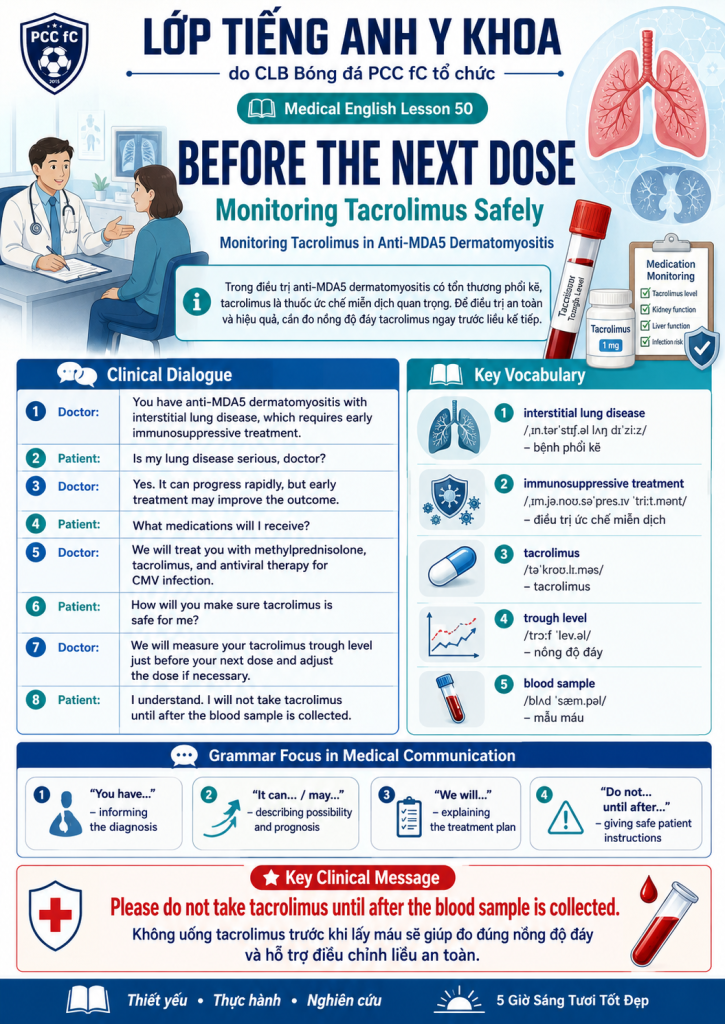
Doctor: You have anti-MDA5 dermatomyositis with interstitial lung disease, which requires early immunosuppressive treatment.
Patient: Is my lung disease serious, doctor?
Doctor: Yes. It can progress rapidly, but early treatment may improve the outcome.
Patient: What medications will I receive?
Doctor: We will treat you with methylprednisolone, tacrolimus, and antiviral therapy for CMV infection.
Patient: How will you make sure tacrolimus is safe for me?
Doctor: We will measure your tacrolimus trough level just before your next dose and adjust the dose if necessary.
Patient: I understand. I will not take tacrolimus until after the blood sample is collected.
5. Bản dịch tiếng Việt
Bác sĩ: Anh/chị mắc viêm da cơ có kháng thể anti-MDA5 kèm bệnh phổi kẽ, cần điều trị ức chế miễn dịch sớm.
Người bệnh: Bệnh phổi của tôi có nghiêm trọng không, thưa bác sĩ?
Bác sĩ: Có. Bệnh có thể tiến triển nhanh, nhưng điều trị sớm có thể giúp cải thiện kết quả.
Người bệnh: Tôi sẽ được dùng những thuốc gì?
Bác sĩ: Chúng tôi sẽ điều trị bằng methylprednisolone, tacrolimus và thuốc kháng virus cho tình trạng nhiễm CMV.
Người bệnh: Bác sĩ sẽ làm thế nào để bảo đảm tacrolimus an toàn cho tôi?
Bác sĩ: Chúng tôi sẽ đo nồng độ đáy tacrolimus ngay trước liều tiếp theo và điều chỉnh liều nếu cần.
Người bệnh: Tôi hiểu rồi. Tôi sẽ không uống tacrolimus cho đến sau khi mẫu máu được lấy.
6. Key Vocabulary – Từ vựng trọng tâm
| English term | Pronunciation | Vietnamese meaning |
| anti-MDA5 dermatomyositis | /ˌæn.ti em diː eɪ faɪv ˌdɜːr.mə.toʊˌmaɪ.əˈsaɪ.tɪs/ | Viêm da cơ có kháng thể anti-MDA5 |
| interstitial lung disease | /ˌɪn.tərˈstɪʃ.əl lʌŋ dɪˈziːz/ | Bệnh phổi kẽ |
| immunosuppressive treatment | /ˌɪm.jə.noʊ.səˈpres.ɪv ˈtriːt.mənt/ | Điều trị ức chế miễn dịch |
| progress rapidly | /prəˈɡres ˈræp.ɪd.li/ | Tiến triển nhanh |
| improve the outcome | /ɪmˈpruːv ði ˈaʊt.kʌm/ | Cải thiện kết quả điều trị |
| methylprednisolone | /ˌmeθ.əl.predˈnɪs.ə.loʊn/ | Thuốc corticosteroid |
| tacrolimus | /təˈkroʊ.lɪ.məs/ | Thuốc ức chế miễn dịch tacrolimus |
| antiviral therapy | /ˌæn.tiˈvaɪ.rəl ˈθer.ə.pi/ | Điều trị kháng virus |
| CMV infection | /ˌsiː em ˈviː ɪnˈfek.ʃən/ | Nhiễm Cytomegalovirus |
| trough level | /trɔːf ˈlev.əl/ | Nồng độ đáy |
| blood sample | /blʌd ˈsæm.pəl/ | Mẫu máu |
| adjust the dose | /əˈdʒʌst ðə doʊs/ | Điều chỉnh liều |
| if necessary | /ɪf ˈnes.ə.ser.i/ | Nếu cần thiết |
| until after | /ənˈtɪl ˈæf.tər/ | Cho đến sau khi |
7. Grammar Focus – Ngữ pháp trong hội thoại y khoa
Grammar Point 1: “You have…” – Thông báo chẩn đoán
Cấu trúc:
You have + disease / condition.
Ví dụ:
You have anti-MDA5 dermatomyositis with interstitial lung disease.
Ý nghĩa:
Anh/chị mắc viêm da cơ anti-MDA5 kèm bệnh phổi kẽ.
Ghi nhớ:
Trong hội thoại y khoa, “You have…” là cấu trúc đơn giản, trực tiếp, dễ hiểu khi thông báo bệnh. Tuy nhiên, nên nói với giọng nhẹ nhàng và có phần giải thích tiếp theo để tránh gây hoang mang.
Ví dụ mở rộng:
- You have pneumonia.
- You have acute pancreatitis.
- You have interstitial lung disease.
- You have CMV infection.
Grammar Point 2: Relative Clause with “which” – Mệnh đề quan hệ để giải thích thêm
Câu trong bài:
You have anti-MDA5 dermatomyositis with interstitial lung disease, which requires early immunosuppressive treatment.
Cấu trúc:
Main clause + which + verb + additional information.
Ý nghĩa:
Anh/chị mắc viêm da cơ anti-MDA5 kèm bệnh phổi kẽ, tình trạng này cần điều trị ức chế miễn dịch sớm.
Vì sao dùng “which”?
Trong hội thoại y khoa, which giúp bác sĩ nối thông tin bệnh học với lý do điều trị một cách mạch lạc.
Ví dụ:
- You have severe pneumonia, which requires intravenous antibiotics.
- Your kidney function is reduced, which means we need to adjust the dose.
- Tacrolimus can affect kidney function, which is why we monitor your blood tests.
Grammar Point 3: “can” and “may” – Diễn tả khả năng trong y khoa
Câu trong bài:
It can progress rapidly, but early treatment may improve the outcome.
Phân tích:
- can progress rapidly = có thể tiến triển nhanh
- may improve the outcome = có thể cải thiện kết quả
Sự khác nhau:
Can thường diễn tả khả năng có thể xảy ra về mặt thực tế.
May thường mềm hơn, phù hợp khi nói về lợi ích điều trị nhưng không cam kết tuyệt đối.
Ví dụ:
- This disease can progress quickly.
- Early treatment may reduce complications.
- Tacrolimus can cause side effects.
- Monitoring the trough level may help improve safety.
Grammar Point 4: “will” – Nói về kế hoạch điều trị
Câu trong bài:
We will treat you with methylprednisolone, tacrolimus, and antiviral therapy.
Cấu trúc:
We will + verb + object.
Ý nghĩa:
Chúng tôi sẽ điều trị cho anh/chị bằng…
Ứng dụng trong y khoa:
Dùng will khi bác sĩ giải thích kế hoạch điều trị, xét nghiệm hoặc theo dõi.
Ví dụ:
- We will start treatment today.
- We will monitor your oxygen level.
- We will check your kidney function.
- We will adjust the dose if necessary.
Grammar Point 5: Passive Voice – Câu bị động trong quy trình y khoa
Câu trong bài:
The blood sample is collected.
Cấu trúc:
Subject + be + past participle.
Ví dụ:
- The blood sample is collected.
- The tacrolimus level is measured.
- The dose is adjusted.
- The medication is given after the test.
Vì sao câu bị động quan trọng?
Trong y khoa, câu bị động thường được dùng khi muốn nhấn mạnh quy trình hoặc thủ thuật, không cần nhấn mạnh ai là người thực hiện.
So sánh:
Active: The nurse collects the blood sample.
Passive: The blood sample is collected.
Câu bị động phù hợp hơn khi giải thích quy trình cho người bệnh.
Grammar Point 6: “just before” – Diễn tả thời điểm chính xác
Câu trong bài:
We will measure your tacrolimus trough level just before your next dose.
Ý nghĩa:
Chúng tôi sẽ đo nồng độ đáy tacrolimus ngay trước liều tiếp theo.
Cấu trúc:
just before + noun / event
Ví dụ:
- just before breakfast
- just before surgery
- just before your next dose
- just before the blood sample is collected
Ghi nhớ lâm sàng:
Với tacrolimus, thời điểm lấy mẫu rất quan trọng. Nếu người bệnh uống thuốc trước khi lấy máu, kết quả có thể không phản ánh đúng nồng độ đáy.
Grammar Point 7: “if necessary / if needed” – Nếu cần thiết
Câu trong bài:
We will adjust the dose if necessary.
Ý nghĩa:
Chúng tôi sẽ điều chỉnh liều nếu cần thiết.
Cấu trúc:
We will + verb + if necessary.
Ví dụ:
- We will repeat the test if necessary.
- We will increase the dose if needed.
- We will reduce the dose if necessary.
- We will change the medication if needed.
Ghi nhớ:
If necessary và if needed đều tự nhiên trong tiếng Anh y khoa.
If necessary trang trọng hơn một chút.
If needed thân thiện và dễ hiểu hơn với người bệnh.
Grammar Point 8: “Do not… until after…” – Dặn người bệnh không làm gì trước một thời điểm
Câu trong bài:
Do not take tacrolimus until after the blood sample is collected.
Cấu trúc:
Do not + verb + until after + event.
Ý nghĩa:
Không làm việc gì đó cho đến sau khi một việc khác hoàn tất.
Ví dụ:
- Do not eat until after the procedure.
- Do not take the medicine until after the blood test.
- Do not leave the ward until after the doctor reviews you.
- Do not take tacrolimus until after the blood sample is collected.
Đây là cấu trúc rất quan trọng trong y khoa vì giúp người bệnh hiểu đúng trình tự an toàn.
8. Useful Medical Communication Patterns
1. Giải thích bệnh
You have…
Anh/chị mắc…
This condition can…
Tình trạng này có thể…
It may affect…
Bệnh có thể ảnh hưởng đến…
Ví dụ:
You have interstitial lung disease. It can progress rapidly.
2. Giải thích kế hoạch điều trị
We will treat you with…
Chúng tôi sẽ điều trị cho anh/chị bằng…
We will monitor…
Chúng tôi sẽ theo dõi…
We will adjust… if necessary.
Chúng tôi sẽ điều chỉnh… nếu cần.
Ví dụ:
We will treat you with tacrolimus and monitor your trough level.
3. Dặn dò người bệnh
Please do not…
Xin đừng…
Please wait until…
Xin chờ cho đến khi…
You should not… until after…
Anh/chị không nên… cho đến sau khi…
Ví dụ:
Please do not take tacrolimus until after the blood sample is collected.
9. Pronunciation Practice – Luyện phát âm
Học viên luyện đọc chậm, rõ trọng âm:
- Tacrolimus – /təˈkroʊ.lɪ.məs/
- Trough level – /trɔːf ˈlev.əl/
- Interstitial lung disease – /ˌɪn.tərˈstɪʃ.əl lʌŋ dɪˈziːz/
- Immunosuppressive treatment – /ˌɪm.jə.noʊ.səˈpres.ɪv ˈtriːt.mənt/
- Blood sample – /blʌd ˈsæm.pəl/
- Adjust the dose – /əˈdʒʌst ðə doʊs/
Câu luyện đọc:
We will measure your tacrolimus trough level just before your next dose.
10. Grammar Practice – Bài tập ngữ pháp
Exercise 1: Fill in the blanks
- You have anti-MDA5 dermatomyositis ______ interstitial lung disease.
- It can progress rapidly, but early treatment ______ improve the outcome.
- We ______ treat you with methylprednisolone and tacrolimus.
- We will measure your tacrolimus trough level just ______ your next dose.
- Do not take tacrolimus ______ after the blood sample is collected.
Answer key:
- with
- may
- will
- before
- until
Exercise 2: Change active sentences into passive sentences
- The nurse collects the blood sample.
→ The blood sample is collected. - The doctor adjusts the dose.
→ The dose is adjusted. - The laboratory measures the tacrolimus level.
→ The tacrolimus level is measured. - The team monitors kidney function.
→ Kidney function is monitored.
Exercise 3: Make patient instructions
Dùng cấu trúc:
Please do not + verb + until after + event.
- take tacrolimus / blood sample collected
→ Please do not take tacrolimus until after the blood sample is collected. - eat breakfast / blood test completed
→ Please do not eat breakfast until after the blood test is completed. - leave the ward / doctor reviews you
→ Please do not leave the ward until after the doctor reviews you.
11. Role-play Practice – Thực hành hội thoại
Situation:
A patient with anti-MDA5 dermatomyositis and interstitial lung disease is going to start tacrolimus. The doctor explains why monitoring is needed and when the blood sample should be collected.
Student A – Doctor:
Explain:
- the disease
- why early treatment is needed
- what medications will be used
- when tacrolimus trough level will be measured
- why the patient should not take tacrolimus before blood sampling
Student B – Patient:
Ask:
- Is my lung disease serious?
- What medications will I receive?
- Is tacrolimus safe?
- When should I take tacrolimus?
- Should I take it before the blood test?
12. Suggested Expanded Dialogue for Advanced Students
Doctor: You have anti-MDA5 dermatomyositis, an autoimmune disease that can affect the lungs.
Patient: Is that why I feel short of breath?
Doctor: Yes. Your lung imaging suggests interstitial lung disease, which can sometimes progress rapidly.
Patient: What is the treatment plan?
Doctor: We will start immunosuppressive treatment, including methylprednisolone and tacrolimus.
Patient: Does tacrolimus have any risks?
Doctor: Yes. It can affect kidney function and cause other side effects, so we need careful monitoring.
Patient: How will you monitor it?
Doctor: We will measure the trough level just before your next dose and adjust the dose if needed.
Patient: So I should wait and take tacrolimus only after the blood sample is collected?
Doctor: Exactly. That will help us get an accurate result and keep the treatment safe.
13. Common Mistakes – Lỗi thường gặp
Mistake 1:
Sai: We will measure tacrolimus after you take the medicine.
Đúng: We will measure your tacrolimus trough level before your next dose.
Mistake 2:
Sai: You must drink tacrolimus before blood test.
Đúng: You must not take tacrolimus before the blood test.
Mistake 3:
Sai: The nurse will take blood before next dose tacrolimus.
Đúng: The blood sample will be collected just before your next dose of tacrolimus.
Mistake 4:
Sai: We will adjust medicine if necessary.
Tốt hơn: We will adjust the dose if necessary.
14. Key Sentences to Memorize
- You have anti-MDA5 dermatomyositis with interstitial lung disease.
- This condition can progress rapidly.
- Early treatment may improve the outcome.
- We will treat you with methylprednisolone and tacrolimus.
- We will measure your tacrolimus trough level just before your next dose.
- Please do not take tacrolimus until after the blood sample is collected.
- We will adjust the dose if necessary.
- This helps us keep your treatment safe and effective.
15. Take-home Message
Trong hội thoại y khoa, ngôn ngữ cần đúng chuyên môn, rõ trình tự và dễ hiểu với người bệnh. Với tacrolimus, điểm quan trọng nhất là thời điểm lấy mẫu máu: đo nồng độ đáy ngay trước liều tiếp theo. Người bệnh cần được dặn rõ: không uống tacrolimus trước khi lấy máu.
Core sentence:
Please do not take tacrolimus until after the blood sample is collected.
Clinical message:
Correct timing of tacrolimus trough measurement helps clinicians adjust the dose safely, reduce toxicity, and maintain effective immunosuppression.
PCC fC